


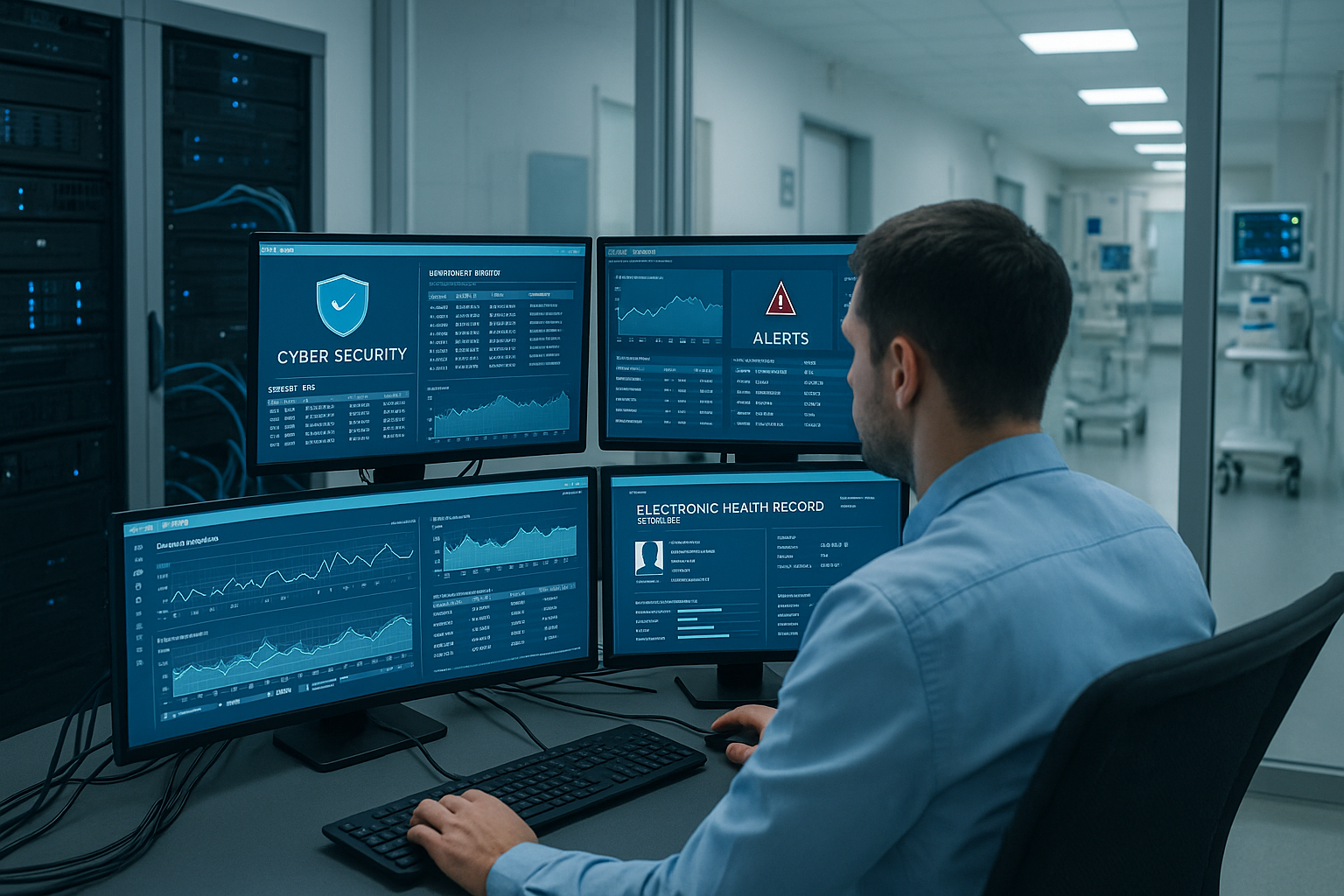
A sensitive sector, valuable data, and fragile security: the perfect combination for digital chaos. The cyberattack on the healthcare sector exemplifies how this vulnerability can be dramatically exploited.
If you work in hospitals, clinics, laboratories or health insurance companies, pay attention: your sector is among the most targeted by cybercriminals worldwide. And that's no coincidence.
By handling critical information daily—often literally related to people's lives—the healthcare sector becomes a breeding ground for cybercriminals who see its data as a gold mine.
Why is the healthcare sector such an attractive target?
1. Extremely valuable data
Electronic medical records, test results, diagnoses, medical histories, insurance plans, personal and banking data, and even biometrics. A single medical record can be valuable. up to 50 times more than credit card data on the illegal market.
In summary: where there is value, there is interest; and where there is interest, risk is imminent.
2. Outdated digital infrastructure
Many healthcare institutions still operate with legacy systems that are poorly integrated and full of vulnerabilities.
Delayed updates, misconfigurations, and a lack of a clear security policy create the perfect combination for attacks.
And, in a sector where the priority is to save lives and speed up care, cybersecurity often takes a back seat.
3. High volume and operational complexity
Every day, thousands of professionals access healthcare systems: doctors, nurses, technicians, administrators, and even external providers.
Every access point is a potential gateway for cyberattacks.
The advancement of the Internet of Medical Things (IoMT) — with connected equipment often lacking adequate protection — only expands this attack surface.
4. Low cybersecurity culture
The lack of training in good digital practices leaves professionals vulnerable to scams. social engineering, phishing and ransomware.
The human factor remains the weakest link in the security chain.
The real impact of a health attack
The damage goes far beyond the financial:
- Service interruption and canceled surgeries
- Leakage of confidential patient data
- Heavy fines for non-compliance with the LGPD
- Irreversible damage to the institution's reputation
In many cases, criminals hijack systems and demand million-dollar bailouts, while lives are at risk from hours or days of inactivity.
How to protect yourself?
There is no single solution, but rather a strategic path: continued investment in cybersecurity.
BNF operates with a proactive, continuous and personalized protection model, including:
Staff training and awareness
24/7 Monitoring of digital assets
Vulnerability testing (Pentest) to identify gaps
Rapid incident response
Real-time intelligence to anticipate threats
Health can't wait. Neither can your safety.
If you work in the management of a healthcare company, the question is not “Will they attack me?”, but rather:
“When will they try, and how prepared will we be?”
Don't wait for the crisis to knock on your door.
Talk to BNF and make your institution's security a priority now.